If you’re planning a contest, the first thing to think about isn’t necessarily the prize, but what you’re asking people to do.
A pet shop can ask customers to photograph their pets, a bookstore can hide clues in its window, and a bakery can invite people to invent its next cookie. They’re all contests, but each offers a very different experience.
The trick is to give people something specific to do. “Enter our contest” doesn’t tell anyone why they’d want to take part, but “Show us your funniest pet photo” gives them a much better idea.
Some contests also give you something valuable beyond participation: user-generated content (UGC). You can turn customers’ photos, videos and creative submissions into social media posts, adding your own captions and sharing their stories to keep your social calendar filled with fresh content featuring real customers. Just ask their permission before sharing anything.
Below are 20 contest ideas you can use for your business. Some take a few seconds to enter, while others ask people to make something, share a story or put their knowledge to the test. You’ll find real brand campaigns alongside ideas that work without a big audience or budget.
Find a contest idea that fits your goal
If you already have a goal in mind, this table can help you narrow the list. Think about what you’d like to have when the contest ends: customer photos to share, ideas for a new product or people coming back for another round.
| If you want to… | Start with… |
|---|---|
| Collect photos or customer stories | Photo contest, before-and-after challenge, customer story contest |
| Get people exploring your website | Scavenger hunt, hidden-clue contest |
| Involve customers in a product launch | Naming contest, design challenge, create-a-bundle contest |
| Bring people together locally | Neighborhood photo contest, event challenge |
| Give your audience a reason to return | Weekly challenge, tournament, recurring trivia |
Creative contest ideas
If your customers have something to show or a story to tell, these ideas give them a place to share it. A clear theme helps them get started while leaving room for their own creativity.
1. Run a photo contest with a specific theme
A photo contest invites customers to share a small part of their lives, whether that’s a pet, a favorite place or something they’ve made.
Asking people to share their coziest reading corner gives them a clearer starting point than asking for a photo of their home. A garden center could try “your best balcony garden,” while a travel company might ask for unexpectedly beautiful places close to home.
As entries come in, you can display approved photos in a public gallery so visitors can browse and vote for their favorites. If you’re combining public votes with a judging panel, explain how each will count toward the result.
With Woorise, the entry form, gallery and voting can sit on one page. Our photo voting contest template gives you a starting point for setting up your own.
2. Show a before-and-after transformation
Sometimes, the most interesting part of a project is seeing how much has changed. A before-and-after contest gives customers a chance to show that progress through two photos and a few words about what they did.
For a furniture store, that might mean inviting people to share a piece they’ve restored. A gardening business could focus on small outdoor spaces, with entries showing how a bare balcony became somewhere to grow herbs or sit outside. The same idea works for home organization, cake decorating and DIY projects.
You have to keep the challenge simple enough for people to take part. Refreshing an old bookshelf over a weekend is something many people could attempt; renovating an entire kitchen just to enter a contest is a different story. Give people enough time, and consider welcoming projects they’ve already finished so they can join in without starting from scratch.
3. Ask customers to share a short video
You don’t need professionally produced videos to run a video contest. A short clip filmed on a phone can be enough, especially when the challenge is something people already enjoy doing.
GoPro’s Line of the Winter challenge invited skiers and snowboarders to submit raw footage of their best runs, captured from their own point of view using a GoPro camera.

The challenge made sense for GoPro because each entry showed what its cameras could capture. You can use the same idea on a smaller scale: a dance studio might ask students to record a short routine, while a kitchenware brand could invite customers to demonstrate a clever use for one of its products.
For many challenges, a 20- or 30-second clip is fine. Let people know what you’d like them to show, which file formats you accept and the upload size limit. Unless editing is part of the competition, a straightforward recording should be welcome.
4. Run a product design contest
Reach Higher Montana invited high school students to design stickers encouraging their classmates to think about their futures after graduation. Students submitted their designs through Woorise, with scholarships awarded and winning designs selected for distribution to schools across Montana.

You can try something similar with your own products. A coffee shop might invite customers to illustrate its next takeaway cup, a stationery shop could use the winning artwork on a notebook cover, or a bakery could ask for ideas for its holiday packaging.
If the design will be printed on a product, provide a template with the right dimensions and space for any text or logo. Explain how you’ll use the winning design and get permission before reproducing or selling it.
5. Hold a caption contest
Some photos practically invite a caption. Picture a dog staring through a café window at a croissant, then ask your audience what it might be thinking. With a photo like that, people can join in with a single comment and enjoy reading everyone else’s suggestions.
Audio equipment manufacturer Genelec invited people to write a caption for one of its photos and reported 1,457 comments. The promotion offered a bag of branded merchandise through a random draw, and Genelec shared a selection of the captions in its results post.
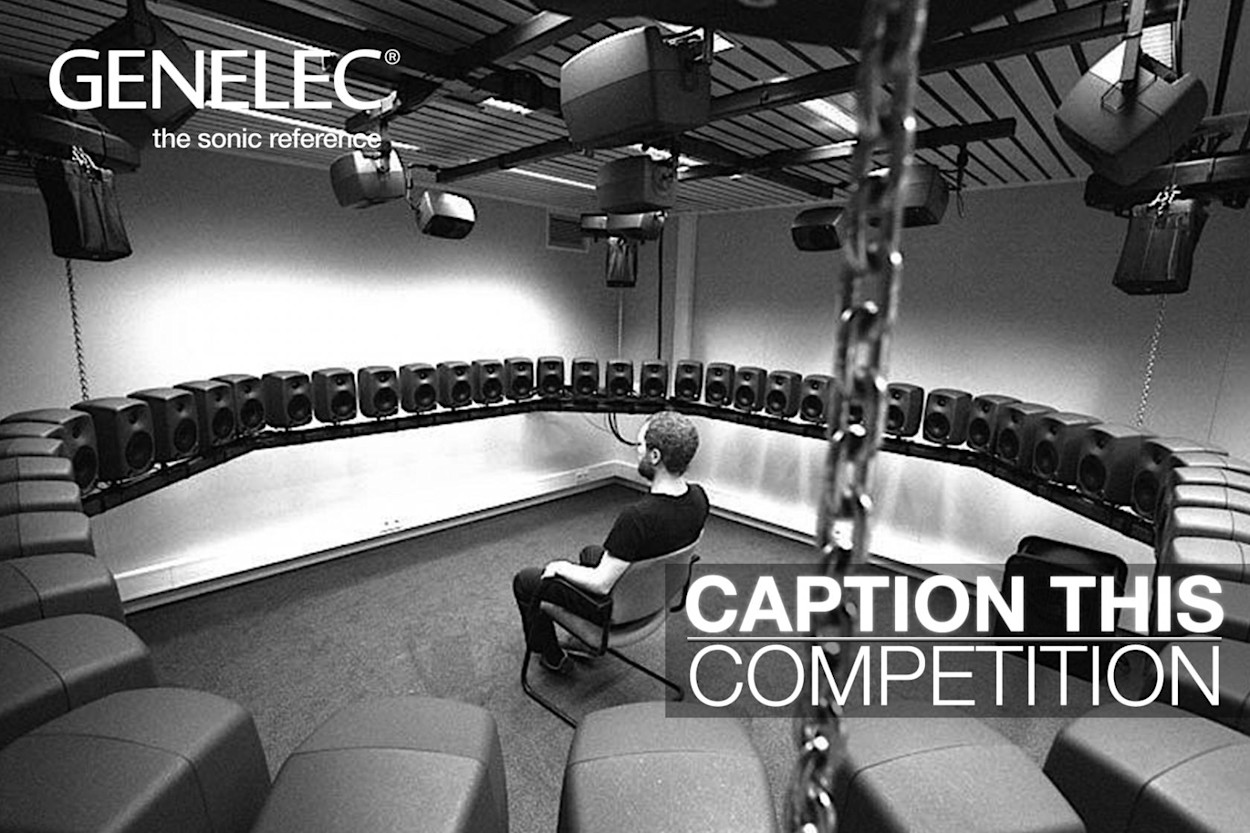
You can use a random draw, as Genelec did, or award the prize for the funniest or most original entry. I’d lean toward judging the captions if creativity is the point, since relying only on likes can favor participants with larger audiences. Whichever approach you choose, explain it when you post the photo.
6. Invite customers to share a story
A good story prompt gives customers something they’d want to talk about even without a prize. For a bookstore, it could be a question like this:
Which book did you read at exactly the right time?
That leaves room for a childhood favorite, a recommendation from a friend or a book that helped someone through a difficult month.
The 3D Printed Tabletop ran a contest asking participants to photograph a 3D print that meant something to them and explain why in 70 words or less. They submitted their photos and stories through Woorise, and judges chose the entries that told the most compelling stories rather than those with the most technically impressive prints.
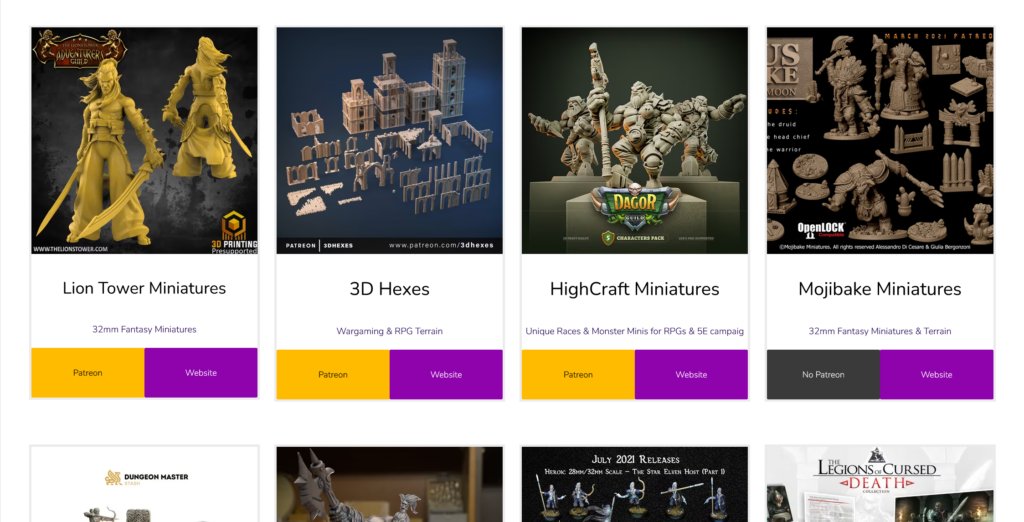
You can take a similar approach with your own customers. A running store might ask about someone’s first 5K, while a travel company could invite people to share a holiday that went wrong but became a favorite memory.
Let people tell their stories in their own words, with a suggested length to help them judge how much to write. Explain how you’ll choose the winner, and ask for permission if you’d like to feature their story in your marketing.
Interactive contest ideas
If you’d like people to join in straight away, try a question, a clue or a vote. These ideas give them something to respond to on the spot, with no photo or finished project to prepare.
7. Turn trivia into a friendly competition
A trivia contest is a good fit when your customers share an interest in a particular subject. A language school could ask about everyday expressions and phrases people often mix up, while a museum might build a quiz around its latest exhibition.
Start with a few easy questions before moving on to harder ones. Keep the subject interesting in its own right, since a quiz that’s entirely about your products can start to feel like a test of how carefully someone has read your website.
You’ll also need a way to separate people who finish with the same score. A final question can break a tie, or you could choose randomly among those with the highest score if that approach fits your rules.
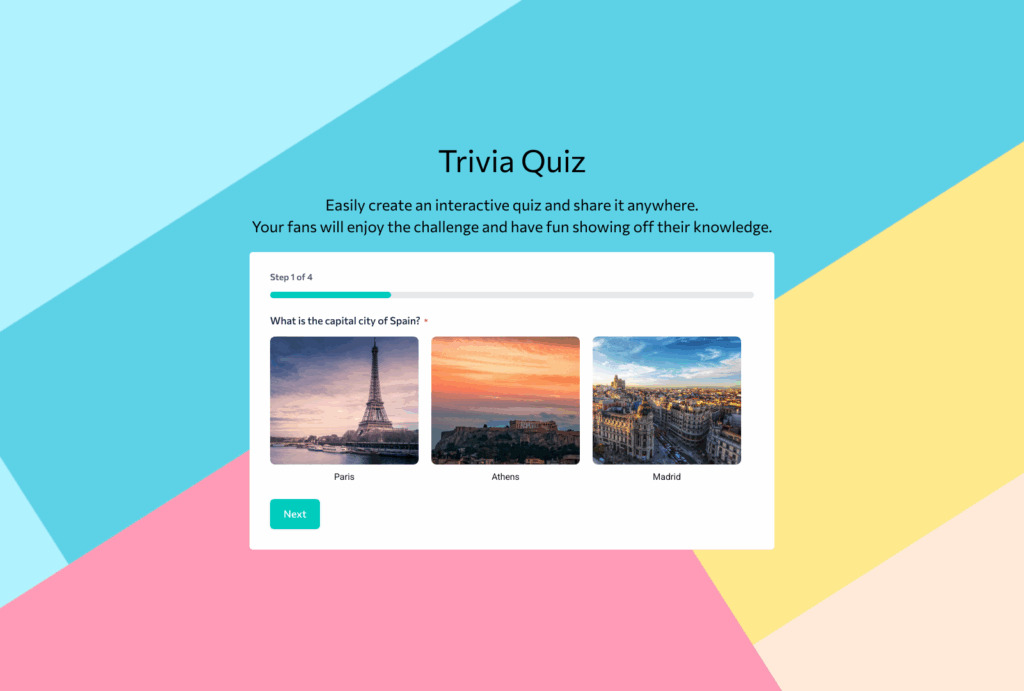
If you’d like to try this, our trivia quiz template lets you collect answers and participant details in the same Woorise campaign.
8. Run a guessing contest
A jar of coffee beans is enough to get a guessing contest going. Take a clear photo with a familiar object beside the jar for scale, then ask people how many beans are inside. You can also include the jar’s dimensions to help them work out their guess.
The same curiosity can work for a product launch. Share a close-up of the new item and invite customers to identify it, then show the full picture when the contest ends.
For the jar version, decide whether the exact number is required or the closest guess wins, and how you’ll settle a tie. When you reveal the answer, let people see how close they came.
As a quick teaser you could even film yourself counting the beans.

Want to run a similar campaign? Start with our guess the number giveaway template and customize it with your own image, question, and rules.
9. Hide clues across your website
An online bookstore could hide four small book icons across its website. Each icon reveals a word, and visitors collect all four to complete a phrase before submitting it through the contest page.
The route can take people through product collections, useful guides or upcoming events. Connect each clue to what’s on the page so there’s a reason to look around: a hint about weekend reading, for instance, might lead to a collection of short novels.
Before people start, tell them where to begin and how many clues they’re looking for. Test the hunt on a phone, too: an icon that’s obvious on a desktop screen may be hard to spot on a smaller one.
10. Let the audience choose a winner
Public voting lets customers help choose the winner, including those who haven’t submitted an entry themselves. It can be especially appealing when the winning idea will become something they can buy, use or see in your business.
LEGO Ideas used this approach in its 2019 vintage car building contest, inviting fans to vote on eligible designs. The winning design was selected to become a LEGO gift with purchase set.

For your own version, you could shortlist three to five entries and let customers choose which one they’d most like to see become real:
- A restaurant could invite customers to suggest a new sandwich, then let diners vote on the finalists.
- A clothing brand might ask customers to submit T-shirt illustrations and vote for the one they would most like to wear.
- A local shop could run a window-display design contest, with visitors voting on a shortlist of customers’ sketches.
Show each finalist clearly so people can compare them, and explain how voting works. Once the winning idea is ready, share an update with your audience.
11. Run a tournament and let customers pick the winner
Imagine your candy shop is looking for a new dessert. Customers submit their ideas, your team picks eight finalists, and the voting begins. Lemon tart might beat chocolate brownie, only to face cheesecake the following week.
The entries compete in pairs, with the more popular choice from each pair moving on until there’s one winner. Keep the voting period the same for every round and show the pairings and results clearly, so customers can follow how each dessert reached the final.
Sharing the results after each round gives people a reason to come back and see whether their favorite is still in the running. At the end, the winning dessert could go on the menu for a limited time, with a café gift card for the customer who suggested it.
12. Run a prediction challenge
With a prediction contest, people make their choice now and come back later to see how it turned out. If you’re launching a product in three new colors, for example, ask customers which one they think will get the most votes in a launch poll.
You can also build a prediction around an event, such as how long your team will take to complete a task. Choose something people can make a reasonable guess about and that you can measure fairly, so the final answer is easy to verify.
Timing matters here: predictions need to close before the poll opens or the event begins. Explain how you’ll choose a winner if several people predict correctly, then share the actual result alongside the winning entry.
Contest ideas built around your products
Customers may have ideas about your products that you’d never come up with on your own. These contests invite them to contribute a name, a recipe or a useful combination of items, with a chance to see their suggestion become something real.
13. Ask customers to name a new product
You’ve developed a new coffee blend, but you haven’t decided what to call it. Why not invite your customers to come up with a name?
Hershey invited customers to name a new candy bar and received more than 43,000 entries. The winning suggestion, WHOZEEWHATZIT, became the product’s name.
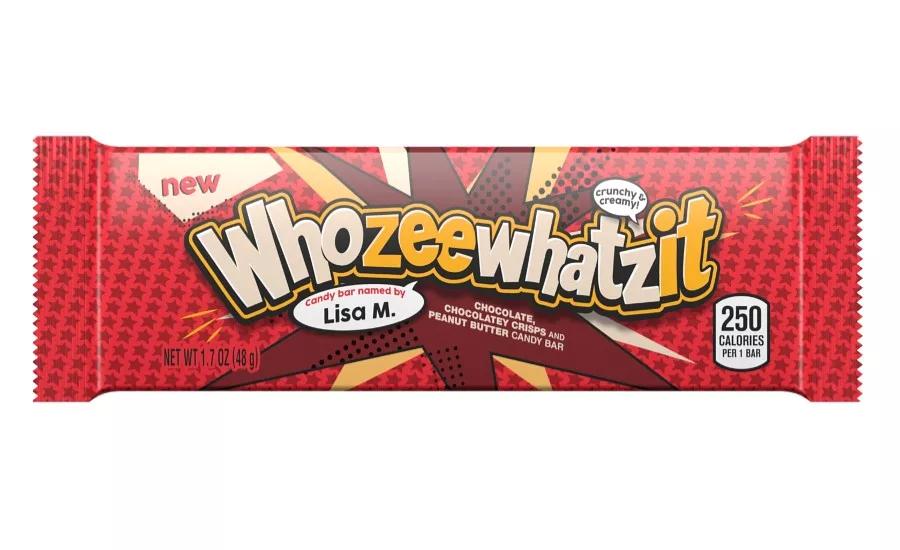
To give people something to work with, show them the product and share a few details about it. For the coffee blend, that could be where the beans come from, how it tastes and whether you’re imagining it as a morning staple or something to enjoy after dinner.
Seeing that name on the packaging can be part of the appeal, along with a prize such as the first batch of coffee or a bundle of your other products. Before entries open, explain how you’ll choose the name and handle duplicate suggestions. Make sure you can use the winning name before making it official.
14. Run a product bundle challenge
A product bundle challenge lets shoppers make a few decisions you might usually make yourself: which items belong together, who they’re for and what makes the combination useful. Give them a budget and a clear brief, such as this one for an outdoor retailer:
Put together a camping kit for two people using up to $150 of products from our store, and tell us why you chose each item.
As people browse your products, they may spot combinations you hadn’t considered selling together. You could also make the challenge seasonal, asking for a Christmas gift bundle for someone who has just started camping.
Choose the winner based on how well the selection meets the brief, with the budget acting as a limit rather than a target everyone has to reach. You could offer the winning bundle as the prize, so the winner gets the products they chose.
15. Invite customers to share their favorite recipes
Before announcing a recipe contest, decide how many finalists your team can realistically cook and taste. Ask for ingredient quantities and preparation steps with each entry so you can recreate the dishes and judge taste, creativity and how easy the instructions are to follow.
For a sauce brand, a brief such as “a dinner for two, ready in 30 minutes, using one of our sauces” gives home cooks plenty to work with. Customers can share recipes they already make or try something new, and you won’t be comparing a five-minute snack with a dish that takes all afternoon.
You could also share selected recipes on your blog or put together a small digital cookbook. Just make sure you have permission first. Woorise lets you easily add a consent checkbox to your entry form, so participants can agree to have their recipes and photos published. It’s a good idea to include their names as well to give them credit for what they created.
16. Invite customers to solve a small, real problem
Think about a small frustration your customers would recognize. For a hardware store, it might be a cluttered garage shelf that never seems to stay organized. Ask customers how they’d organize it, using whatever approach they think would work best.
A photo of the shelf and its dimensions give everyone the same starting point. Participants could suggest a solution through a sketch, a photo or a short explanation, so they don’t have to build the whole thing just to enter. Your team could then choose the most useful idea and demonstrate it in the store.
Keep the task in proportion to the prize and the time people are likely to have. Organizing a desk or finding a storage solution is manageable; asking someone to redesign your entire store for a gift card is a much bigger ask.
Community and recurring contest ideas
A shared place, event or cause can give people a reason to take part that feels close to home. The ideas below build on those connections, including ways to keep people involved beyond a single contest.
17. Celebrate your neighborhood with a photo contest
A neighborhood photo contest gives residents a chance to share the places they notice and appreciate. For a local café, that might mean asking customers for their favorite nearby spot: a quiet street in the morning, an old storefront or a little corner most people walk past.
You could display a selection in the café, with visitors voting for their favorite or a local photographer choosing the winner. A tourism business could do something similar with hidden gems around the city, using an online gallery to bring the entries together.
For example, Nextdoor’s 2022 #LoveYourNeighborhood photography contest invited residents to share photos of local places, businesses, people and scenery. A judging panel selected the finalists, then residents voted for their favorite.
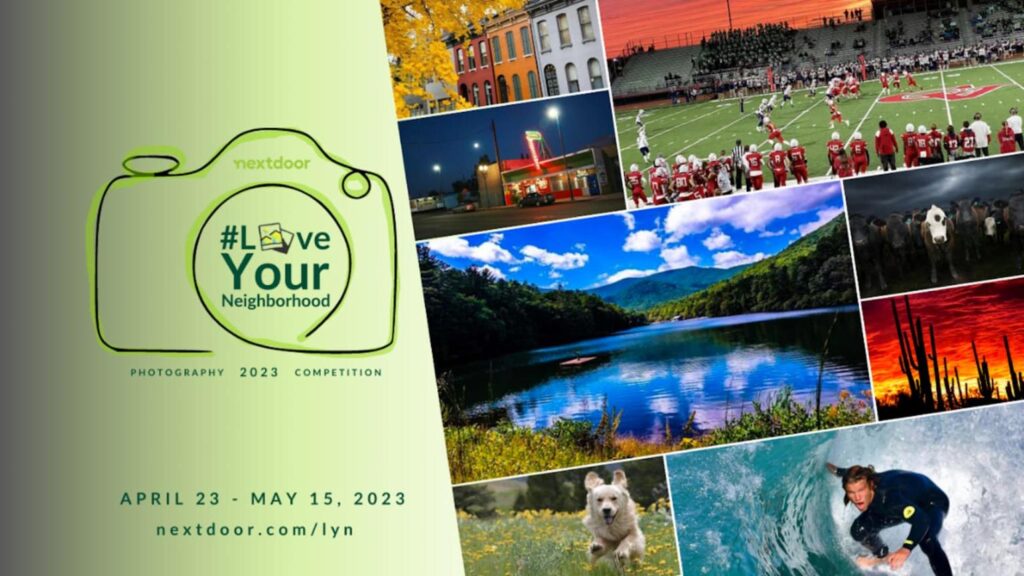
For your own version, leave people a little room to explore the neighborhood so you get a variety of perspectives. Before reusing the photos in marketing, get permission, credit the photographers and consider the privacy of any recognizable people in the images.
18. Create an event challenge
At a trade show, local market or in-store event, a small challenge gives visitors something to do while they’re with you. It can also be an easy conversation starter, especially when the activity relates to something you’re displaying or demonstrating.
At a farmers’ market, you might invite people to identify three herbs by their smell. A bookstore could hide clues among its shelves that lead to the title of a mystery book, while a conference exhibitor could offer a short quiz about the industry.
The activity should fit comfortably into someone’s visit. A QR code beside the display can take them to a form where they submit their answer on their phone, with clear instructions about the prize and when you’ll announce the winner.
Try the whole process with someone who hasn’t seen the challenge before. If they get stuck on a clue or struggle to find the entry form, you’ll know what needs attention before the event gets busy.
19. Run a recurring contest
Canva’s past Design Challenges have included prompts such as designing a playlist cover or a holiday postcard. If a contest gives customers something they enjoy doing, you can bring it back with a fresh theme. Keeping the format familiar makes it easier for previous participants to join again, while the new prompt gives them something different to try.

A stationery shop could use that idea for a monthly postcard contest, perhaps changing the destination or occasion each time. A fitness studio might introduce a different movement challenge each week. You can keep the entry process and prize consistent so returning participants already know how to take part.
If you’re considering something similar, I’d start with three challenges before committing to a full year. That gives you a chance to see which themes people enjoy, whether previous entrants return and how much work each round takes your team.
20. Support a cause through a creative challenge
Supporting a local cause can give a creative contest a purpose that customers care about. A clothing brand, for example, could partner with a charity and invite people to design a reusable tote bag, with a stated amount from each sale of the winning design going to the organization.
Along with a cash prize, the winner gets to see their work produced and credited to them, while the charity benefits from the sales.
Disney’s 2018 Share Your Ears campaign invited people to share photos wearing Mickey Mouse ears or their own versions, with eligible posts linked to donations for Make-A-Wish. Although it was a fundraising campaign rather than a contest, it’s a useful example of giving people a simple, personal way to show their support.

Choose an organization that makes sense for your business and explain how the contribution will work. Participants should know who will receive the donation, how much you’ll give and whether there’s a maximum amount.
Before you launch your contest
Once you’ve found an idea you’d like to try, a few decisions will make it easier to put into practice. They also help participants know what they’re signing up for, from the effort involved to what happens after they enter.
Choose a prize that matches the effort
A caption takes a few seconds to write, while an illustration, video or original recipe can take much longer. Let that guide the value of the prize, along with what your customers would actually enjoy receiving. If you need a few options, our guide to giveaway prize ideas can help you choose.
Explain how you’ll choose the winner
People should know what makes a strong entry before they start working on one. For a judged photo contest, you might consider creativity, originality or how well the image fits the theme. If public voting is involved, explain whether it determines the winner or helps your judges decide, and plan how you’ll handle suspicious votes.
A random prize draw works differently from a contest based on skill or judging, and legal requirements can vary by location. Make sure your rules cover the format you’re running.
Set the dates
Put the key dates somewhere easy to find on the entry page: when submissions close, when any separate voting period takes place and when you’ll announce the winner. Include a time zone, particularly if people can enter from different locations. The page should also make clear who is eligible to take part.
Make entering simple
The entry process should suit what you’re asking people to do. A caption can work well as a social media comment, while photo uploads, quiz answers and voting are easier to bring together on a dedicated campaign page.
Before you launch, try entering on your phone, including any photo or video upload. Read the instructions as if you’re seeing them for the first time, and check that the confirmation explains what happens next.
Plan your promotion and follow-up
Think about how people will first hear about the contest and when you’ll remind them to enter. Your website, email list and social accounts are useful places to start; our giveaway promotion guide covers more ways to reach an audience that would be interested in taking part.
When it’s over, contact the winner, thank everyone who entered and share the winning submission where you have permission. Then look back at the goal you started with. Did you collect useful customer photos, discover a product idea or give people a reason to return? That will help you decide what to repeat or change next time.
Create your own contest
Start with one idea you can picture your customers enjoying, then work out what they’ll submit and what will make the prize worth their time.
With Woorise, you can collect submissions, review entries, display approved photos in a gallery and let visitors vote on their favorites. Pick a giveaway template, add your prize and instructions, and customize the page to suit your brand.
Not sure which contest fits your goals or how to get started? Talk to our team and we’ll help you choose an idea and plan your next contest.